What good sleep quality means
Good sleep is usually uninterrupted enough to feel restorative. Sleep duration and continuity both matter. Adults aged 18 to 60 are generally advised to get at least seven hours a night on a regular basis, although individual needs vary. American Academy of Sleep Medicine and Sleep Research Society guidance
Wearable estimates of deep sleep, REM sleep and sleep stages can be useful for spotting broad patterns. They are not a diagnosis. Avoid treating one night or one score as proof that your body is recovering well or poorly.
Five practical ways to improve sleep
1. Make the bedroom quiet, dark and comfortable
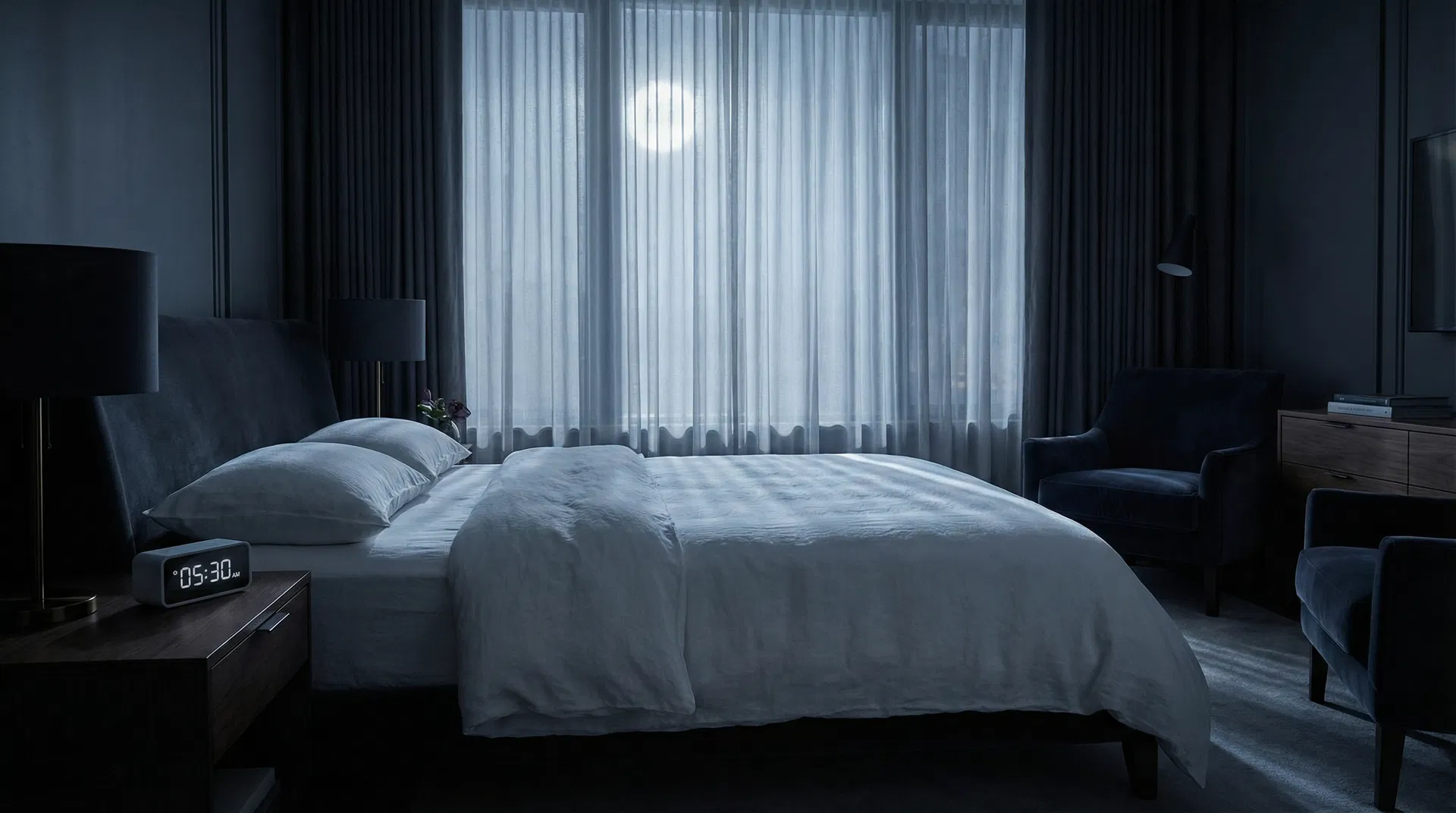
Keep the room cool enough for comfort, reduce noise where possible, and use curtains or an eye mask if light enters the room. Put phones and work materials out of reach if they keep your mind active. A fan, earplugs or steady background sound may help. Adjust bedding or ventilation if you sleep hot.
2. Keep a stable wake time
Choose a wake time you can maintain most days. A regular schedule gives your body a useful cue, but bedtime should still follow your sleepiness. Sleep medicine treatments often prioritise a consistent wake time rather than forcing everyone into the same bedtime. Research on sleep hygiene also suggests that regularity can help, while the size of the benefit varies between people. Sleep hygiene review
If weekends differ greatly from weekdays, shift gradually. Do not try to compensate for a short night by spending excessive time awake in bed.
3. Use light to support your body clock
Get outdoor light during the day, especially in the morning when practical. Keep evening lighting lower and warmer if bright light makes you feel alert. Turn off electronic devices at least 30 minutes before bed if they interfere with winding down. Centers for Disease Control and Prevention sleep guidance
A strict screen ban is not required. Content, brightness, timing and sensitivity matter. If you need to work late, take short breaks and keep the screen as dim as is comfortable.
4. Check caffeine, alcohol and exercise
Caffeine can remain active for several hours, and sensitivity varies. If sleep is difficult, test moving coffee, energy drinks and pre-workout products earlier in the day. Alcohol may make you drowsy at first while disturbing sleep later. Large meals close to bed can also be uncomfortable.
Regular exercise may help sleep. Finish hard training early enough that it does not leave you overheated or alert at bedtime. A short walk, gentle stretching or easy breathing can suit the final part of the evening.
5. Build a low-stimulation wind-down
Use the final 30 to 60 minutes for a repeatable routine. Reading, a shower, light stretching, music or writing down tomorrow's tasks can help create a boundary around the day. If you are awake and frustrated, get out of bed for a quiet activity in low light. Return when sleepy rather than turning the bed into a place for worry.
Slow breathing can be a reasonable relaxation exercise. In a randomised study, five minutes a day of several breathing practices improved mood and reduced anxiety or respiratory rate. The study found no significant change in HRV, resting heart rate or sleep measures over 28 days. It therefore does not support a guaranteed sleep improvement or a fixed HRV percentage. Breathing trial in *Cell Reports Medicine*
Track patterns without chasing scores
For two weeks, record bedtime, estimated time asleep, wake time, night waking, naps, caffeine, alcohol, exercise and how you felt during the day. Compare weekly patterns rather than reacting to one night. A wearable can add context, but its sleep-stage estimates are less reliable than a clinical sleep study. Focus on function: alertness, mood, concentration and whether sleep feels refreshing.
A template or session example in this article is illustrative, not a real client result. Your response may be different.
When to seek clinical help
Speak with a GP or qualified health professional if sleep problems persist, affect daily life, or occur with loud snoring, gasping, witnessed pauses in breathing, morning headaches, restless legs or severe daytime sleepiness. These signs can occur with sleep disorders that need assessment. Do not use sleep hygiene alone to manage suspected sleep apnoea, persistent insomnia, unusual movements or medication-related sleep problems. The CDC advises speaking with a healthcare provider for regular sleep problems.
Breathing exercises should be comfortable. Stop if you feel faint, distressed or short of breath. Seek urgent care for severe or sudden breathing difficulty, chest pain or other emergency symptoms.
The bottom line
Start with one or two changes: a stable wake time, less evening light, earlier caffeine, or a calmer bedroom. Keep them long enough to notice a pattern. There is no guaranteed result or perfect sleep score. If you want a broader review of recovery, training and lifestyle, take the Performance Assessment or apply to work together.
Sources
American Academy of Sleep Medicine and Sleep Research Society: adult sleep duration consensus
Irish et al., The Role of Sleep Hygiene in Promoting Public Health
Balban et al., Brief structured respiration practices enhance mood and reduce physiological arousal
Related resources
Want protocols like these, personalised for you?
If you are ready to work together, apply directly. Otherwise, take the free assessment to see where you stand.