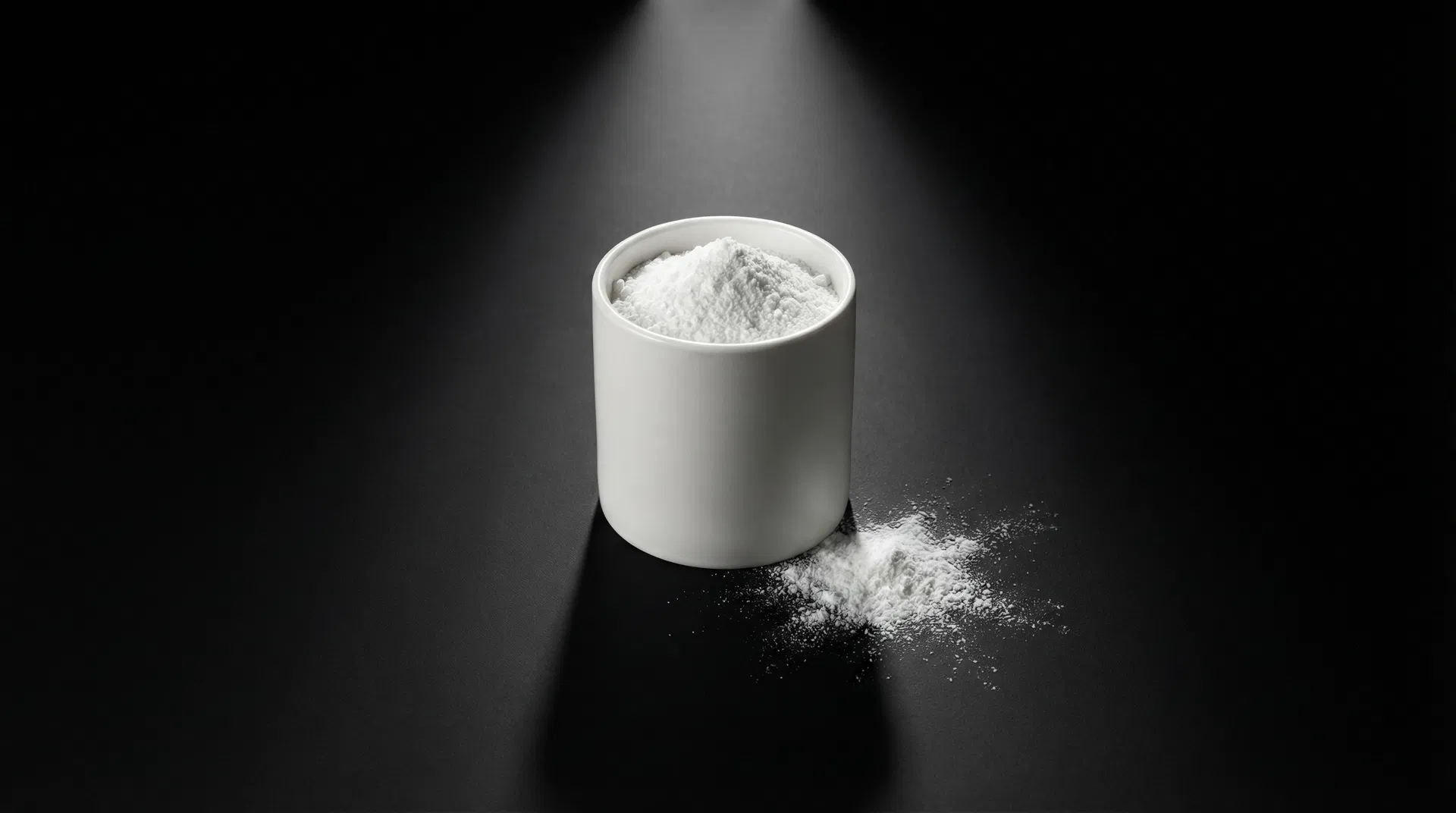
Creatine is a compound stored mainly in muscle, with smaller stores in the brain. Phosphocreatine helps regenerate adenosine triphosphate (ATP) during short, demanding efforts. Food provides creatine, especially meat and fish, and the body also makes it. Supplementation can raise muscle creatine stores and support repeated high-intensity exercise. It is useful, but it is not a substitute for sleep, food, training or medical care.
What the evidence supports
Creatine monohydrate is the most studied form. Research supports benefits for repeated high-intensity exercise, strength and training adaptations when it is paired with suitable training. The International Society of Sports Nutrition position stand describes creatine monohydrate as well studied and reports that muscle stores can be maintained with a daily dose after saturation.
Cognitive findings are promising but less settled than the exercise evidence. Some studies report benefits in memory or demanding tasks, with effects that may depend on diet, age, sleep loss and the task being tested. A review of common creatine questions notes that the evidence is mixed across outcomes and groups, so creatine should not be presented as a guaranteed focus aid or a treatment for fatigue. Better sleep remains the first response to regular sleep restriction.
Choosing a product
Choose plain creatine monohydrate from a reputable seller. A brand does not need to be German-made to be suitable, and country of origin alone does not prove purity or risk. Avoid claims that one country is automatically safe and another is automatically contaminated.
Quality control matters because supplement manufacturing and labelling standards vary. In a survey of 33 products sold in Italy and produced in several countries, Moret and colleagues found creatinine above 100 mg/kg in 44% of samples. About 15% had detectable dihydro-1,3,5-triazine, with a maximum of 8.0 mg/kg, and some had dicyandiamide above 50 mg/kg. This study does not justify claims about all products from a particular country, and it does not establish that a specific brand is unsafe today.
Look for:
A short ingredient list containing creatine monohydrate.
A lot or batch number and a clear manufacturer or importer.
Accessible testing or quality documentation where available.
For tested athletes, a recognised programme such as Informed Sport, which says it tests every certified sports-supplement batch for banned substances before release. This reduces one category of risk. It is not a guarantee of performance or medical safety.
Third-party testing is a useful quality signal, not proof that one trade-marked source is the only suitable choice.
How to take creatine
For most adults, 3 to 5 grams of creatine monohydrate daily is a common maintenance range. The appropriate amount can vary with body size, diet, training and individual circumstances. A universal formula such as 0.1 grams per kilogram is not mandatory.
A loading phase is optional. A common research protocol uses about 20 grams daily, split into smaller doses, for 5 to 7 days. This may raise muscle stores faster but can cause stomach upset for some people. Taking 3 to 5 grams daily reaches saturation more gradually, often over about 3 to 4 weeks. Timing is not important. Take it at a time you can repeat. Mixing it with a meal is reasonable, but there is no need for a special drink.
Drink to thirst and maintain normal hydration. Creatine can increase water held in muscle, and some people notice a change in body weight. That change is not automatically fat gain. Reduce the dose or stop and seek advice if persistent gastrointestinal symptoms occur.
Safety and healthcare boundaries
Evidence in healthy adults generally finds no harmful change in kidney function at recommended doses, but that does not make creatine suitable for everyone. Speak with a GP or pharmacist before using it if you have kidney disease, abnormal kidney tests, are pregnant or breastfeeding, are under 18, have a relevant medical condition, or take medicines that may affect kidney function or fluid balance. A clinician may want baseline or follow-up tests. Tell them that you use creatine, because creatine can affect blood creatinine readings without necessarily indicating a loss of kidney function.
Do not use this article to diagnose symptoms or replace prescribed treatment. Seek clinical care for ongoing exhaustion, mood changes, sleep problems, breathlessness, chest symptoms, marked swelling or other new symptoms.
Cognition, recovery and tracking
Creatine may help some people with demanding cognitive work, but the size and reliability of any benefit remain uncertain. It cannot compensate for chronic sleep loss. Use it as one small part of a routine that includes regular meals, resistance training, aerobic work and a consistent sleep schedule.
A sensible starting plan
- 1
Choose plain creatine monohydrate with clear batch information.
- 2
Start with 3 grams daily for a week, then consider 5 grams if it suits you and is appropriate for your circumstances.
- 3
Keep the timing simple and record tolerance, training and body-weight changes.
- 4
Review the plan with a clinician when health conditions or medicines are relevant.
For related recovery and training context, see how to boost your HRV and the Performance Assessment. You can also explore the wider insights library.
Sources
Related resources
Want protocols like these, personalised for you?
If you are ready to work together, apply directly. Otherwise, take the free assessment to see where you stand.